
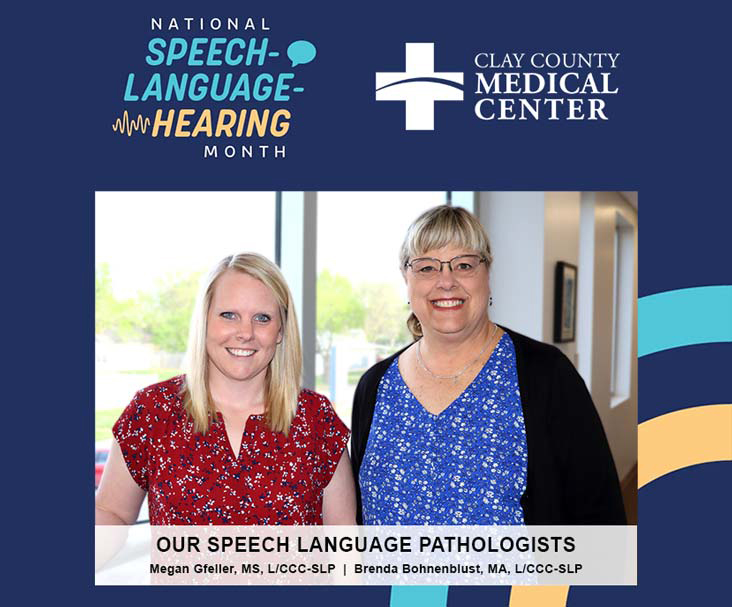
In recognition of National Speech-Language-Hearing Month this May, Speech-Language Pathologists Megan Gfeller, MS, L/CCC-SLP, and Brenda Bohnenblust, MA, L/CCC-SLP, with Clay County Medical Center are encouraging families and caregivers to learn more about communication disorders, recognize signs that support may be needed, and understand the important role speech-language therapy can play in improving quality of life.
“Although communication disorders are very common, many people don’t know where to turn for help or even that help exists at all,” said Gfeller. “There’s not much more fundamental to a person’s quality of life than their ability to communicate. Working with a speech-language pathologist can make a huge difference, not just for people with communication challenges, but for their caregivers and care partners as well.”
According to a 2025 poll from the American Speech-Language-Hearing Association, 60% of caregivers surveyed said communication breakdowns make life more challenging. Among caregivers who had worked with a speech-language pathologist, more than 90% said they would recommend speech therapy services to others in similar situations.
Speech-language pathologists (SLPs) diagnose and treat communication disorders in individuals of all ages. They also help families and caregivers develop strategies to support more successful communication in everyday life. SLPs work in a variety of settings, including hospitals, clinics, schools, private practices, and community-based programs.
Speech and language difficulties are among the most common developmental concerns in children. Early intervention can help improve communication, social interaction, and learning outcomes.
Gfeller encourages parents and caregivers to:
- Focus on the message rather than mistakes when children are speaking.
- Respond positively to all communication attempts.
- Increase exposure to language through reading, singing, conversation, and daily routines.
- Use the language they are most comfortable speaking at home, noting that multilingual exposure does not delay speech development.
Parents who have concerns about their child’s development are encouraged to monitor communication milestones and speak with their pediatrician if multiple milestones are being missed.
Adults may experience communication or cognitive difficulties following medical conditions such as stroke, dementia, Parkinson’s disease, head and neck cancer, or traumatic injuries.
To support communication, Bohnenblust recommends that care partners:
- Reduce distractions and background noise.
- Use simple, clear communication without speaking down to the individual.
- Offer choices instead of open-ended questions.
- Be patient and allow time for responses.
- Encourage alternative forms of communication such as writing, gestures, pictures, or facial expressions.
She also emphasized the importance of seeking immediate medical attention if an adult suddenly develops difficulty speaking or understanding language.
“Communication challenges can feel isolating, but support is available,” said Bohnenblust. “Speech therapy can help individuals maintain independence, strengthen relationships, and improve confidence in everyday interactions.”